Timeline at a glance
Dates below follow the castle’s own history pages, the Victor Hugo museum, the pumped-storage operator SEO and the Liberation Route Europe memorial network. Where sources disagree, the text says so.
| Date | Event |
|---|---|
| Late 3rd century AD | First fortification on the castle rock, at a crossroads on a branch of the Reims–Cologne road |
| Mid-4th century | Stone fort built; abandoned around 430–440 |
| 697/698 | A vineyard on a hill identified with Vianden appears in Irmina of Oeren’s gift to Willibrord of Echternach |
| c. 1000 | First medieval stone castle |
| c. 1170–1203 | Rebuilding: decagonal chapel, gallery and great hall |
| 1220–1250 | Henry I, the ‘Sun Count’; Gothic remodelling of the castle |
| 1417 | Death of Countess Marie of Sponheim-Vianden; county passes to the House of Nassau |
| 1530 | The Nassaus acquire the principality of Orange |
| 1603 | Hockelstuerm watchtower built |
| 1815 | Congress of Vienna gives the lands east of the Our and Sûre to Prussia; the Our becomes a border |
| August 1820 | Castle sold at auction to Wenzel Coster and stripped |
| 1862–1871 | Victor Hugo’s visits; he lives in Vianden from 8 June to 22 August 1871 |
| 1935 | Victor Hugo House opens as a museum |
| 19 November 1944 | Battle of Vianden: local militia repel a German attack |
| 12 February 1945 | Vianden liberated, the last town of the Battle of the Bulge |
| 1959–1964 | Pumped-storage plant built; inaugurated 1964 |
| 1977 | Castle transferred to the Luxembourg state; restoration begins |
Romans, Franks and the first castle
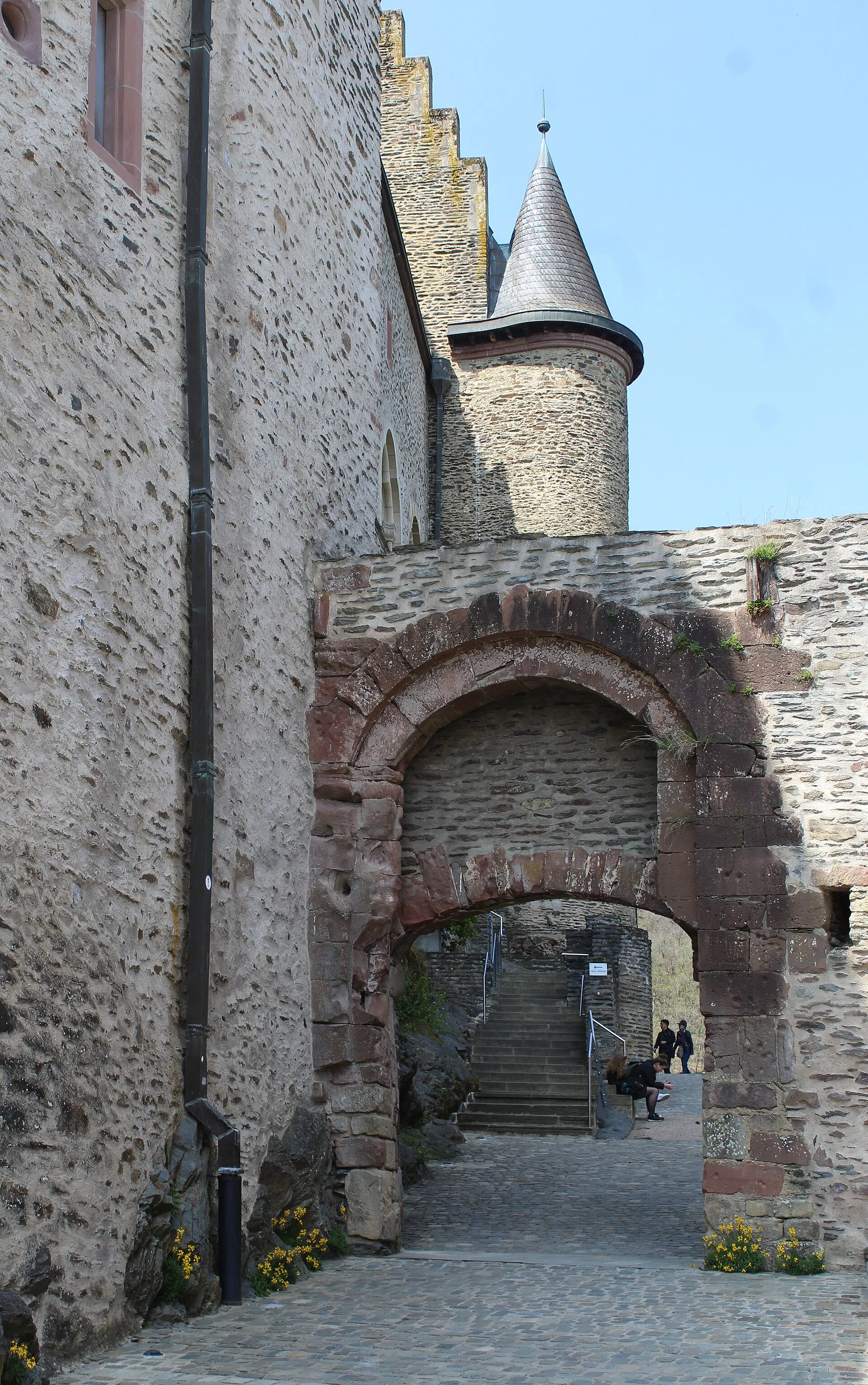
Vianden’s rock was valuable long before there was a town. Excavations at the foot of the castle chapel in 1994 found a square late-Roman tower, and coins and pottery date the first fortification to the last decades of the 3rd century AD, when Germanic raids made refuges necessary. It watched a branch of the great road from Reims to Cologne where it crossed the Ardennes and the Our valley towards Echternach, Bitburg and Trier, then one of the capitals of the Roman Empire. A stone fort followed in the mid-4th century and was abandoned around 430–440.
The next written trace comes from 697/698, when Abbess Irmina of Oeren in Trier gave her estate at Echternach to the missionary Willibrord; the castle’s historians identify a hill with a vinedresser named in that deed with Vianden. Pottery shows people living in the bailey from around 700, and around the year 1000 the first medieval stone castle went up: an oval ring wall, a hall and a chapel built into the old Roman tower.
The counts of Vianden
From around 1100 the castle was the permanent residence of a noble family, the counts of Vianden, and over the next two centuries they turned it into one of the most ambitious residences in the region. Their lands stretched across the Ardennes and the Eifel, and their connections reached the French royal family and the German imperial court. Tree-ring dates of 1196 and 1203 mark the great rebuilding of the chapel and great hall, which the castle’s historians attribute to Count Frederick III, a loyal vassal of the Hohenstaufen emperors.
The high point came under Henry I (count 1220–1250), the ‘Sun Count’, who married Margaret of Courtenay, daughter of the Latin Emperor of Constantinople and a cousin of the French king Philip Augustus. Their son Frederick took part in the Fifth Crusade. The Gothic remodelling that gave the castle its skyline dates from this period. In the town below, the Trinitarian church, an early Gothic hall church with two naves, was built in the 13th century; English-language references link its founding to Henry I and give the date 1248.
By the end of the 13th century the counts had become vassals of the counts of Luxembourg. Vianden received town rights early: references commonly cite a charter granted in 1308 by Count Philip II.
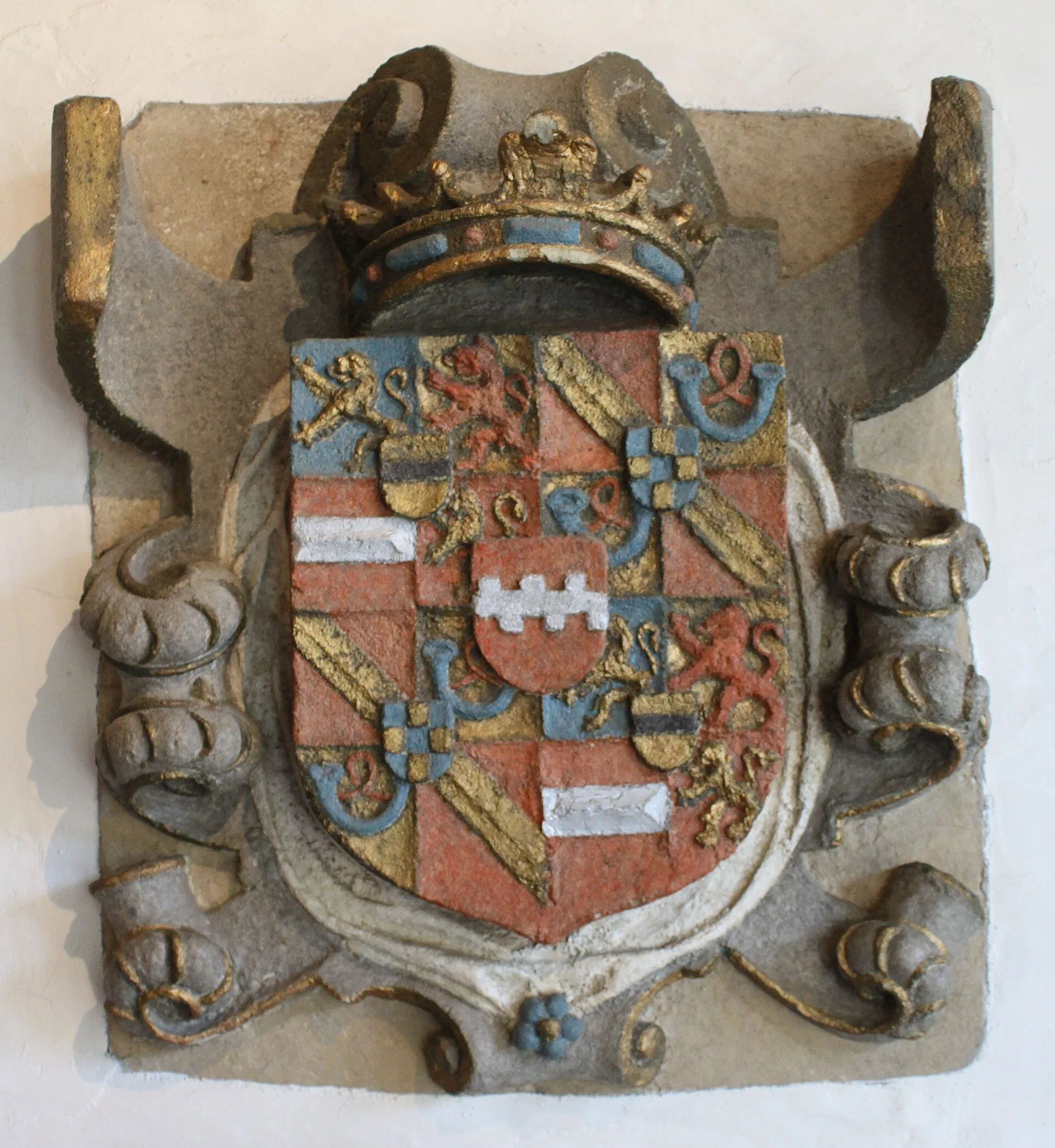
A carved coat-of-arms relief at the castle.
Orange-Nassau: a Dutch royal connection
In 1417 the last of the Vianden line, Countess Marie of Sponheim-Vianden, died, and the county passed by inheritance to the House of Nassau. In 1530 the same family acquired the principality of Orange in southern France, and as the House of Orange-Nassau it went on to lead the Dutch Republic and, later, to become the royal house of the Netherlands. The title ‘Count of Vianden’ stayed in the family, which is why Vianden still has a special link with the Netherlands, and why the Netherlands is one of its main visitor markets.
For the town, distant lords meant decline. The castle was no longer a residence; from the early 15th century its great rooms were used for storage, the medieval buildings of the bailey were replaced by stables, workshops and a brewery, and in the early 17th century the stewards got new quarters in the middle of the castle. In 1603 the town built the Hockelstuerm watchtower on a rock below the castle as part of its fortifications.
Border town and ruin: 1815–1890
The Congress of Vienna in 1815 redrew the map: the lands east of the Our, Sûre and Moselle that had belonged to Luxembourg went to Prussia, and the Our became a frontier. Vianden found itself on the edge of the new Grand Duchy, ruled in personal union by King William I of the Netherlands.
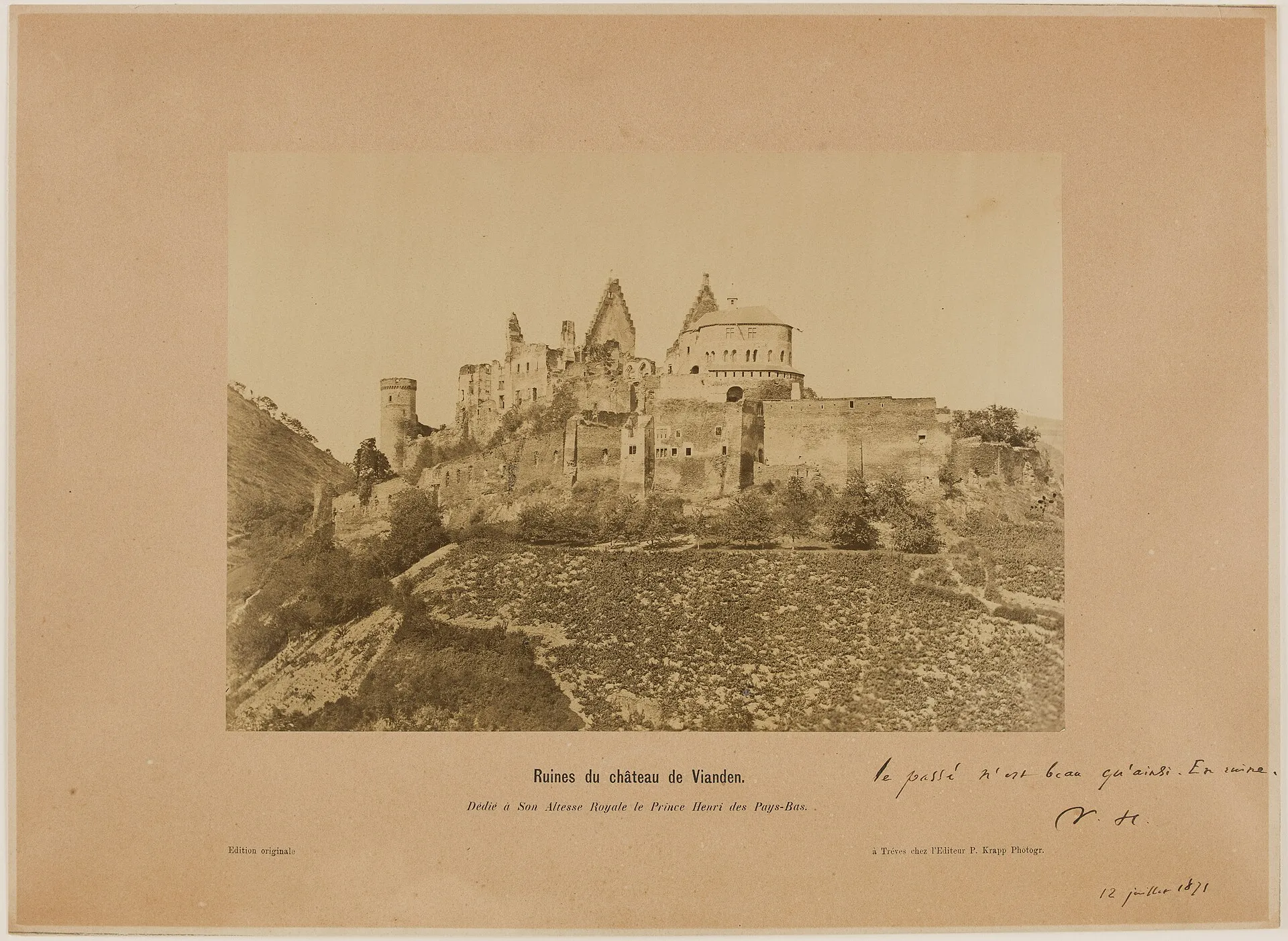
In August 1820, under William I, the castle was sold at public auction to Wenzel Coster, a citizen of Vianden, who immediately began demolishing it and selling the roof timbers, lead and copper. Secondary sources add that in 1827 the king bought back the ruin, and that Prince Henry of the Netherlands restored the chapel in the mid-19th century (dates of 1849 and 1851 are both given). For the rest of the century the broken castle above the river was a favourite of painters, printmakers and early photographers. The photograph at the top of this page, taken after 1865, shows how little was left.
Victor Hugo in Vianden
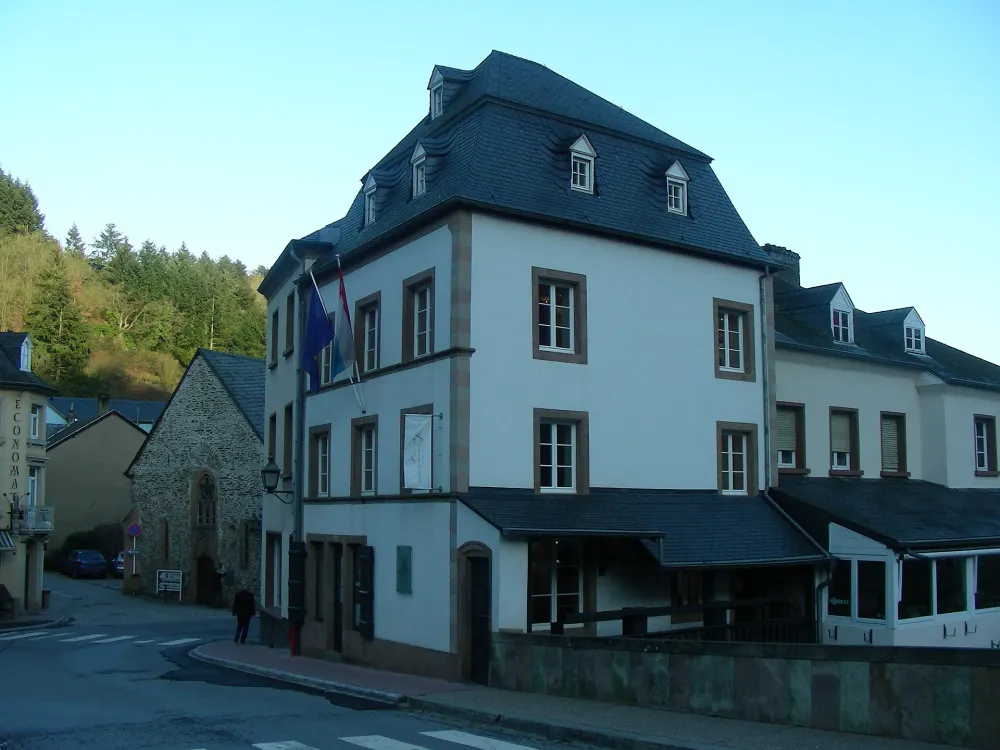
France’s most famous writer came to Vianden as a tourist in August 1862, September 1863 and September 1865, during his exile from Napoleon III’s France. In 1871, expelled from Belgium for offering asylum to Communards, he came back as a refugee and lived from 8 June to 22 August in a house by the bridge. On 25 September 1863 he had recorded in his notebook a serenade by working men in smocks, lit by tallow candles, and in June 1871 Vianden’s workers’ band serenaded him again. He wrote poems and made drawings here, including views of the ruined castle. His house became a museum in 1935. Read the full story in our Victor Hugo House guide.
1944–45: the Battle of Vianden and the last liberation
American troops liberated most of Luxembourg in September 1944, and German forces withdrew to defensive positions behind the border rivers. Vianden, on the Our, became a no-man’s-land facing German positions on the opposite bank. A local armed resistance group, the ‘Veiner Miliz’, formed to defend it. According to Liberation Route Europe it began with a handful of refugees and young men who had escaped forced conscription into the German army, and grew to 26 members, including three women. Armed with captured German weapons and supplies from the Americans, they manned observation posts in and around the town, including in the castle ruin, escorted American reconnaissance patrols, guarded the river bridges and gathered intelligence.
On 19 November 1944 German troops attacked the town. The militia held out through several hours of street fighting and the attackers withdrew with heavy casualties. The militia was led by Victor Abens, mayor of Vianden from 1946 to 1981 and later a member of the European Parliament; the square by the town hall and the castle’s concert hall bear his name.
Sources differ on the numbers. Liberation Route Europe speaks of 26 militia members against more than 120 attackers. The English Wikipedia article on the battle gives about 30 militia members, joined by a few American soldiers and a Belgian, against some 250 Waffen-SS troops, with one militiaman and one civilian killed and 18 German dead. We report both and have not found a primary source that settles the figures.
When the Germans launched the Ardennes offensive (the Battle of the Bulge) in December 1944, the outnumbered militia withdrew; several members then served with American units as scouts. Even after the Luxembourg Ardennes were cleared at the end of January 1945, the Germans held a narrow corridor at Vianden to let stragglers reach the Westwall. The town was finally liberated on 12 February 1945 by the US 1255th Engineer Battalion, making it, in Liberation Route Europe’s words, the last town of the Battle of the Bulge to be liberated. A memorial to the militia stands at Op der Plank, and in February 2025 the town marked the 80th anniversary of its liberation with five days of events.
WWII and castle tours from Luxembourg
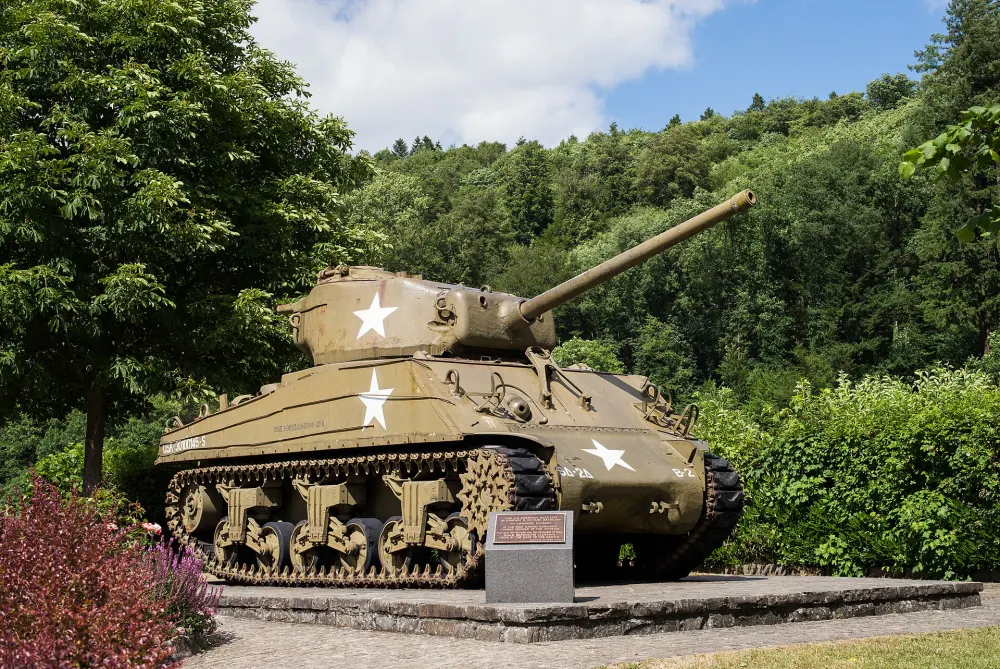
WWII battlefields and castles private tour
A private tour, listed under Clervaux, combining Second World War sites in the Luxembourg Ardennes with castles. Good for history readers who want a guide to the Battle of the Bulge country.
Check availability Book via GetYourGuide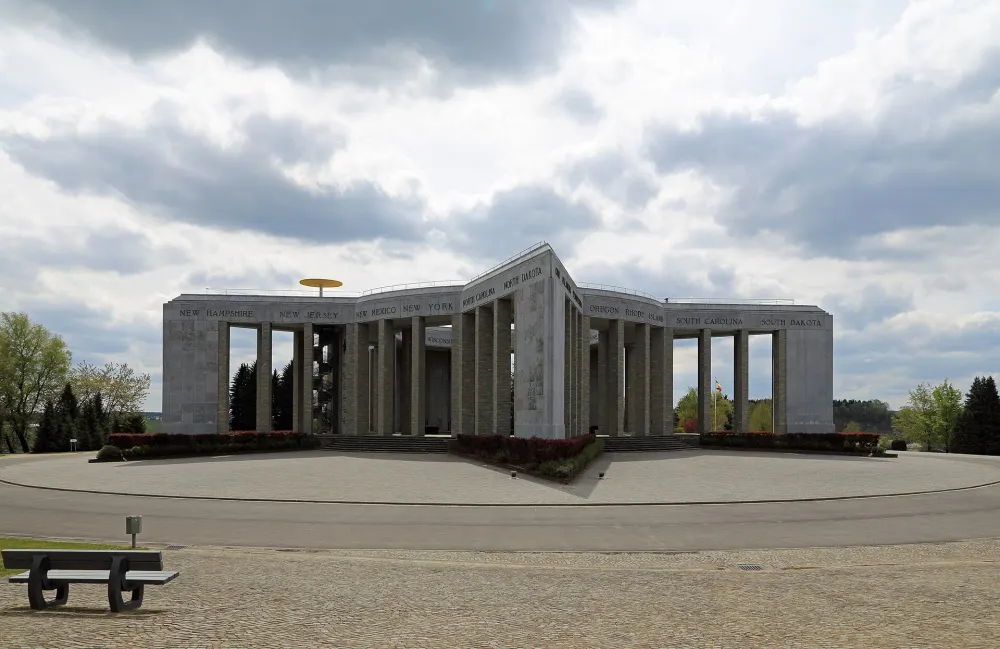
WWII private tour with Bastogne and Schumann’s Eck
A private Second World War day linking Bastogne in Belgium with the Schumann’s Eck memorial area near Wiltz, both key Battle of the Bulge sites.
Check availability Book via GetYourGuide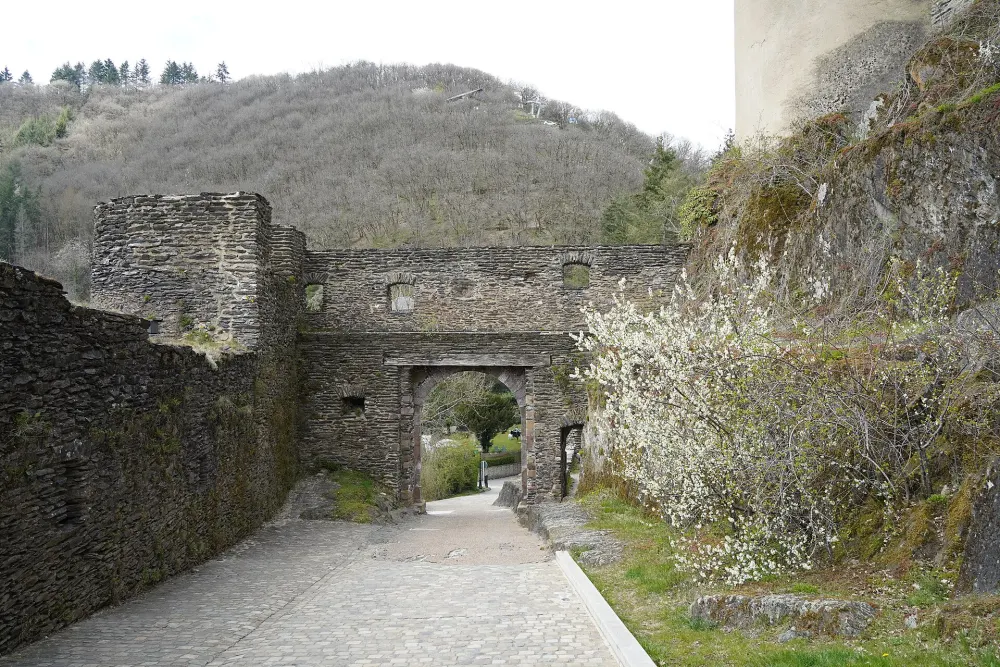
Vianden Castle tour with transfer and a surprise stop
The one bookable tour on GetYourGuide built around Vianden itself: transport from Luxembourg plus the castle, and an extra stop the listing keeps as a surprise. Best for visitors without a car.
Check availability Book via GetYourGuideTour listings are on GetYourGuide. Prices, times, inclusions and cancellation terms are shown live on GetYourGuide; we never quote them here.
Power, tourism and restoration: 1950 to today
After the war the Our was put to work. The Société Électrique de l’Our was founded in 1951, a state treaty with Rhineland-Palatinate followed in 1958, and between 1959 and 1964 the pumped-storage plant was built with its dam just north of the town and an upper reservoir on Mont Saint-Nicolas. At its inauguration in 1964, in the presence of Grand Duchess Charlotte, it was the largest plant of its kind. See the Our valley.
The castle’s turn came in 1977, when the Grand Ducal family transferred it to the state. Restoration since then has rebuilt walls, gables and roofs, given the chapel back a roof reflecting its Gothic form, and restored and refurnished the Nassau wing; today it is Luxembourg’s most visited historic monument, according to the association that runs it. In April 2026 Vianden added a new statue of Victor Hugo by the bridge. Start with our castle guide.
Frequently asked questions
Who built Vianden Castle?
The counts of Vianden, between the 11th and 14th centuries, on the site of a late-Roman fort and an early medieval refuge. The main surviving buildings date from the late 12th and first half of the 13th century.
What is the link between Vianden and the Dutch royal family?
In 1417 the county of Vianden passed to the House of Nassau, which acquired Orange in 1530 and became the House of Orange-Nassau, today’s Dutch royal house. The family kept the title of counts of Vianden.
What happened in Vianden in 1944?
On 19 November 1944 the local resistance militia, led by Victor Abens, defended the town and castle against a German attack, which was repulsed after several hours. Vianden fell back under German control during the Battle of the Bulge and was finally liberated on 12 February 1945.
Why was Vianden Castle a ruin?
It was sold at auction in 1820 to a local man who demolished much of it and sold the materials. It stayed a ruin until the state took it over in 1977 and restored it.
Sources and official information
Facts were checked against these sources in November 2026. Opening hours, prices and timetables change: check the official site before you travel.
- castle-vianden.lu
- castle-vianden.lu
- victor-hugo.lu
- liberationroute.com
- en.wikipedia.org
- en.wikipedia.org
- en.wikipedia.org
- seo.lu
- visitluxembourg.com
- visit-vianden.lu
- lb.wikipedia.org
- en.wikipedia.org
Vianden.com is an independent guide and is not the official tourist office or the castle. Some links are affiliate links (GetYourGuide, Booking.com): if you book through them we may earn a commission at no extra cost to you.